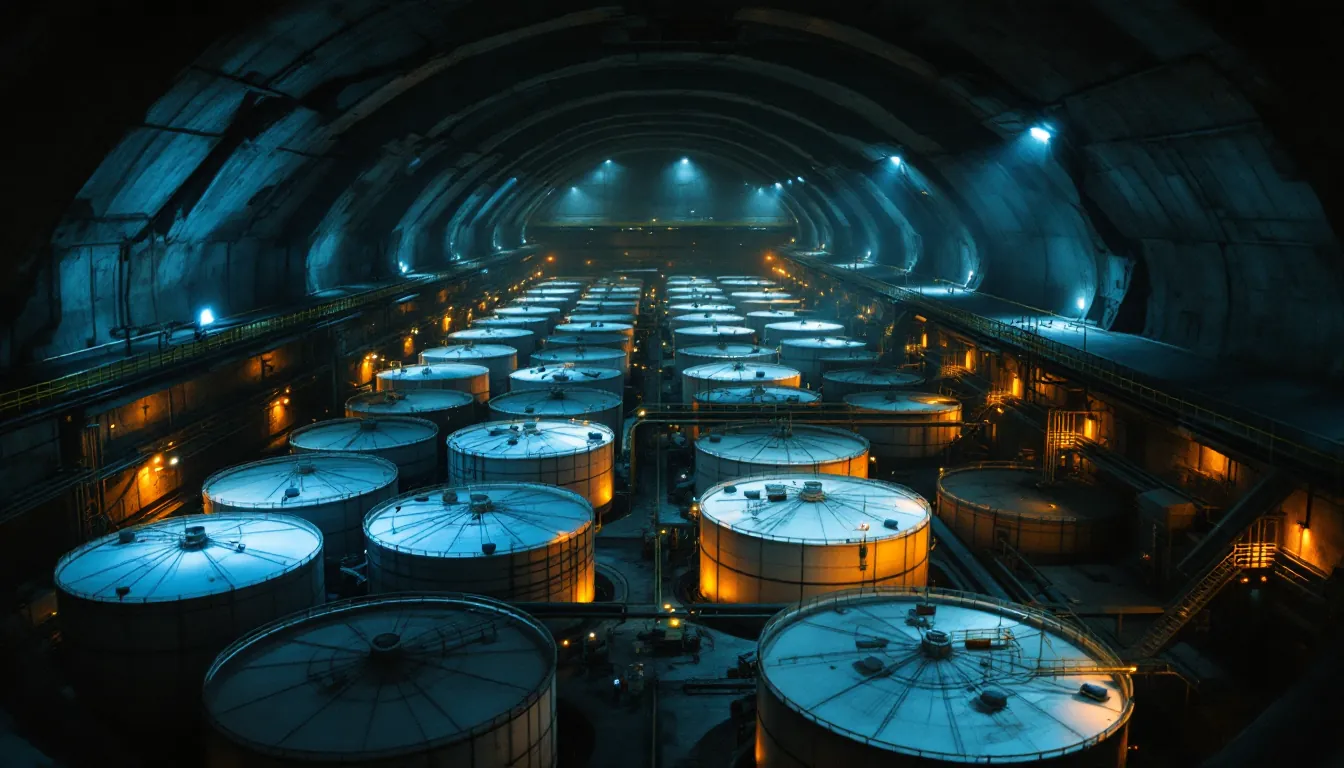
June 2022. Ukraine war, Russian sanctions, Brent at 120 USD. Americans pay 5.50 EUR/liter. US President flips a switch: "SPR Release, 1 million barrels per day, 180 days." Brent falls 30% over two months. Pump prices drop. Campaign relief. That's SPR in real emergency.
Definition: Government's emergency brake
SPR is state oil released only in emergency. Three emergency categories: (1) Supply disruptions (7% global deficit threshold). (2) Geopolitical (war, embargo). (3) Disasters (hurricanes, tanker accidents). Size: USA ~400M bbl (~7 days global demand). Germany no national SPR, instead EU system + IEA obligation.
Reserve history: buildup, sizes, releases
1974–1977: US builds after OPEC embargo. Strategic: break cartel power via counter-supply. 1981: Peak 727M bbl. 1991: First major release (17M bbl, 6 weeks). 2005: Hurricane Katrina (30M). 2011: Libya conflict (30M). 2022: Ukraine war (180M over 6 months), largest ever.
Who holds what, and when is it released?
US SPR: President can order directly. Normal threshold: IEA vote (10+ countries approve 60M+ bbl release). EU: 90-day-consumption mandate per country. IEA: 31 members, vote at 7% disruption. Germany: ~3M bbl + importer obligations.
What SPR release means for your costs
Scenario: Medium crisis. Brent would spike 85→120 USD without SPR. With 60M bbl release: Brent → 105 USD. Heating oil +0.20 EUR/L instead of +0.30. Your 3,000L tank: 300 EUR cheaper.
Action: Monitor reserve status
- Track SPR fill levels (EIA publishes weekly: normal 400–500M bbl).
- Watch IEA announcements ("collective action" signals crisis but buffer buying time).
- Monitor geopolitical triggers (Hormuz, OPEC threats).
- Brent drops within hours of SPR announcement; heating oil lags 4–6 weeks.