1. Why diesel is scarcer than crude
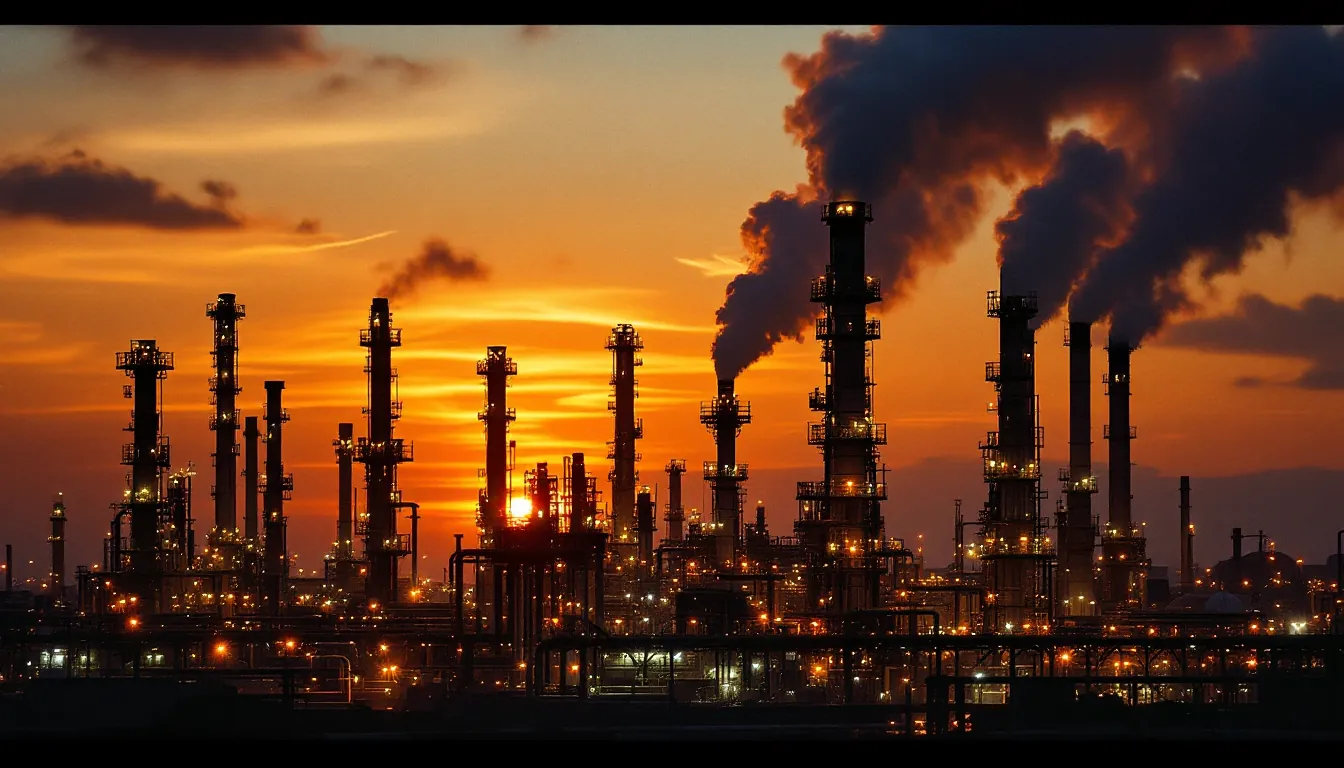
There is crude; what is missing is the refining capacity that turns it into diesel and the shipping that carries the diesel to where it is needed. Two quotes from the same evening make the point: at 19:40 on 22 September 2026 Brent stood at $99.80 a barrel and was falling, while ICE gasoil stood at $1,452.50 a tonne and rose 0.99 per cent (HeizOel24.at). Converting the tonne at the customary 7.45 barrels, a barrel of gasoil costs about $195, roughly $95 more than the crude it is made from. That gap, the diesel crack spread, is the shortage in a single number; our conversion is an approximation, the order of magnitude is not.
Three causes overlap. First, Hormuz: the Gulf states are large exporters of finished products, and Bloomberg reported on 10 September that product shipments through the strait are recovering more slowly than crude; freight now costs at least 25 per cent of the crude price to Asia (OilPrice.com, 22 September). Second, Russia: after drone strikes, three of the country's six largest diesel refineries had to cut or halt output in September, and the export ban on diesel, gasoline and jet fuel is being extended to the end of October (Hydrocarbon Processing, 16 September). Third, utilisation: US refineries ran at 96.8 per cent in the week to 11 September (DOE via HeizOel24), and European plants are at maximum according to Motor16; no more diesel is coming out of this asset base.
2. How empty the tanks are
US distillate stocks stood at 107.9 million barrels in the week to 11 September 2026, 16.8 million below a year earlier (DOE data via HeizOel24); that is the lowest September level since 1982 (EnergyNow, 22 September). The EIA expects inventories to fall below 100 million barrels in September and to remain below the five-year low through much of 2027 (STEO, 9 September). Diesel and heating oil are the same product under different tax treatment; the US Northeast heats with heating oil, and the heating season begins in October.
| Market | Price | Date | Source |
|---|---|---|---|
| US diesel | $6.53/gal (all-time high) | 22 Sep 2026 | AAA |
| US diesel a year earlier | $3.69/gal | 22 Sep 2025 | AAA |
| Germany, diesel | €2.471/L (record) | 17 Sep 2026 | ADAC |
| France, gazole | €2.41/L | 20 Sep 2026 | Hérault Tribune |
| Spain, diesel A (incl. 20 ct rebate) | €1.829/L | 22 Sep 2026 | Motor16 |
| ICE gasoil | $1,452.50/t | 22 Sep 2026, 19:40 | HeizOel24.at |
| Brent | $99.80/bbl | 22 Sep 2026, 19:40 | HeizOel24.at |
Europe publishes no weekly stock statistic of this kind; its prices tell the story. The ADAC notes that crude and the exchange rate explain only part of the German diesel price and that margins along the chain need scrutiny (ADAC, September 2026). Our glossary covers how middle distillates are traded and what turns tightness into a real diesel shortage.
3. What winter brings: shortage or just price?
The EIA does not expect empty pumps; it expects high prices: $5.55 a gallon for diesel in the fourth quarter of 2026 and $5.66 for heating oil, then a decline to $4.40 and $4.31 on average in 2027 as the Hormuz constraints unwind in the second quarter of 2027 (STEO, 9 September). The market prices scarcity, it does not ration it; rationing was the exception in March 2026 (Slovenia limited private motorists to 50 litres a day, Wikipedia) and stayed the exception. What winter adds is seasonal: heating oil demand in the US Northeast and in Europe, winter diesel with costlier additives from November, and cold that raises consumption per mile.
Two things could change the picture quickly. Upwards: a collapse of the Hormuz talks as on 8 July, or further refinery outages in Russia. Downwards: a reopening of the strait, which Iran's seven-day offer of 22 September holds out; it would cheapen crude fast and diesel slowly, because stocks have to be rebuilt first (see Hormuz reopening: three scenarios). The US outlook for diesel and heating oil is on US diesel and heating oil prices.
4. What households and fleets should do now
Do not hoard: jerry cans in the basement are a fire risk and change nothing in the market. If you heat with oil and your tank is below a third, order now, because heating oil is exposed to the diesel squeeze this winter, not to the crude price; the rule is on Heating oil: buy now or wait?. Households in the Northeast can check LIHEAP eligibility before the season starts.
Fleets lock in through fuel cards with a fixed surcharge or through fixed-price contracts where dealers still offer them (see fixed-price contract) and plan for winter diesel from November. Anyone with a choice defers diesel consumption that can be deferred: a $95-a-barrel gap between gasoil and crude is historically wide, and the EIA expects normalisation in 2027.
See in a minute what diesel at $5.55 or $4.40, at €2.47 or €2.00, means for your budget.
Calculate my numbers