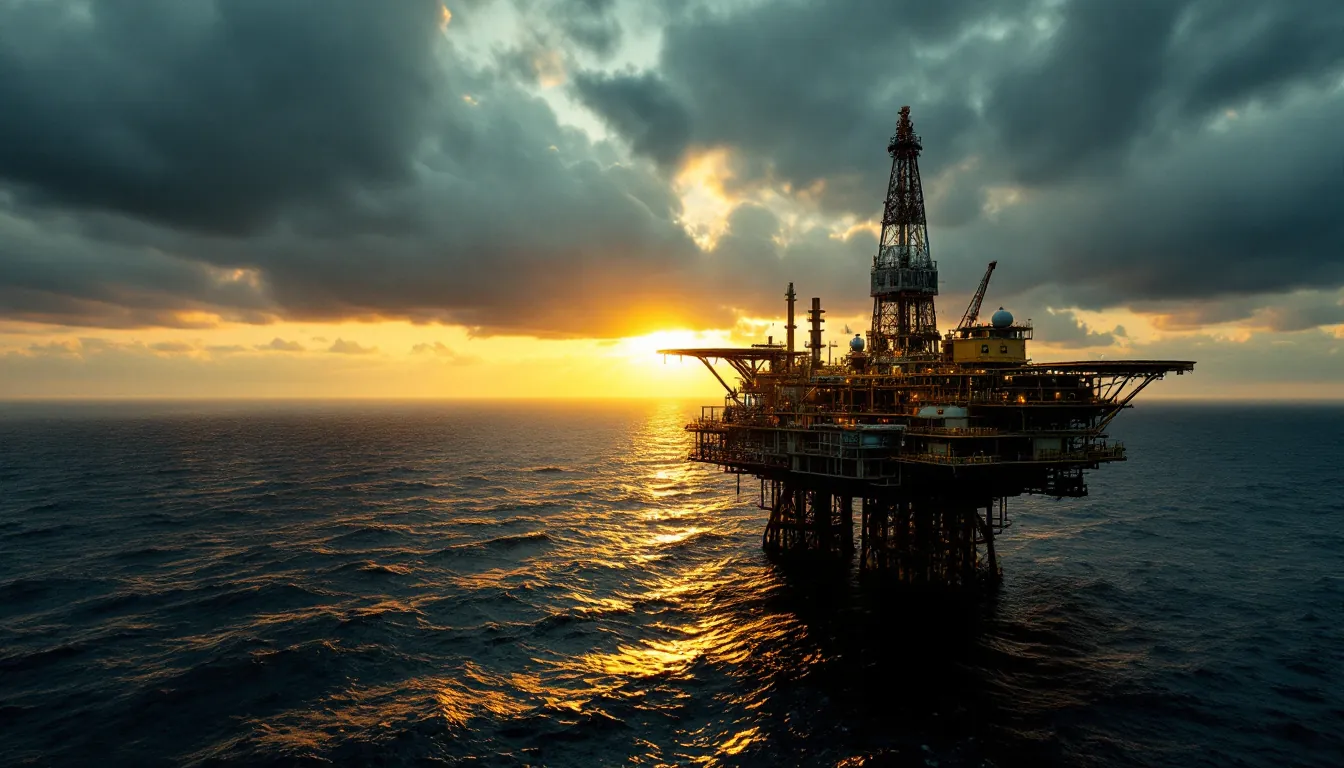
1. What happened this week
The starting point is 11 September. After drone strikes, Saudi Arabia shut down the East-West pipeline as a precaution. The line carries crude oil from the fields in the east right across the peninsula to the Red Sea. It is the most important route that bypasses the Strait of Hormuz. Riyadh names Iraq as the launch site of the drones, and Baghdad confirmed Maysan province on 13 September. No one has claimed responsibility (CNN, 11 September 2026).
On the same day, according to Asharq Al-Awsat, the Houthis occupied the district of Dhubab and the island of Mayun, also known as Perim, in Bab al-Mandab. On 14 September the islands of Greater and Lesser Hanish north of the strait followed, after pro-government forces had withdrawn (Euronews, 14 September 2026). There is no formal closure of the strait, but in practice both shores and the islands off them are in the hands of one party to the war.
On 15 September the Panama Canal Authority cut daily transits from 34 to 32, and the slots for Panamax vessels to 23. Two weeks earlier the figure still stood at 36 (The Rio Times, September 2026).
On 17 September several media outlets reported that Saudi Arabia wants to restore half of the pipeline capacity within days and full capacity within about six weeks. The oil price eased in response (Trading Economics, 17 September 2026).
2. The oil price: futures market and spot market are far apart
The Brent futures contract, quoted everywhere as the oil price, stood at around USD 103 per barrel on 17 September (Trading Economics, 17 September 2026). It was higher at the start of the week; the news of the pipeline restart pushed it down.
The spot price that the US Energy Information Administration records for Brent available for immediate delivery stood at USD 130.80 on 15 September. This gap is unusual, and it is the real story: anyone who needs oil in the tank today pays considerably more than someone betting on delivery in a few months. The market is therefore counting on the situation easing, but is paying dearly for the current scarcity.
For households the spot market matters more than the futures market, because heating oil, diesel and petrol are bought out of what is flowing now. That explains why prices at the pump do not follow immediately when Brent falls by three dollars in a single day.
3. Red Sea: both shores in the hands of one party to the war
Bab al-Mandab is around 30 kilometres wide at its narrowest point. Whoever controls the shores and the islands within it can watch ships, hail them and, if it comes to that, fire on them, without formally closing the strait. That is exactly the position since this week.
The consequence does not show up in the news reports but in freight rates. Chartering a supertanker from the Persian Gulf to China cost around USD 704,000 a day in calendar week 36; on 5 September 2025 the figure was USD 53,783 (Baltic Exchange, route TD3C). War risk insurance for high-risk voyages runs at 7.5 to 10 percent of the vessel's value according to AXS Marine, whereas around 0.25 percent was usual before the war (AXS Marine, weekly report, week 35/2026).
Ships diverting around the Cape of Good Hope need about 35 days instead of 19 from the Gulf to Rotterdam, according to the U.S. EIA. Those days show up later as a surcharge on every litre that arrives in Europe.
4. East-West pipeline: what a partial restart really means
The East-West pipeline has a nominal capacity of around five million barrels a day. As long as it is down, Saudi oil bound for Europe has to take the route through the Strait of Hormuz, that is, through exactly the bottleneck the line is meant to bypass.
A partial restart at half capacity is therefore more than a footnote, but less than an all-clear. First, the announcement has so far not been confirmed by a statement from the operator, only by reports of government accounts. Second, the line only helps if cargo can be loaded at the far end: the port of Yanbu on the Red Sea has most recently exported no crude oil. Third, the route from Yanbu to Europe runs through the same Red Sea that the preceding section deals with.
We have therefore not yet changed the pipeline's classification. It stays at shut down until loadings are documented. The interim status is recorded in our data with a source for every entry.
5. What this means for households in Europe
Heating oil cost EUR 1,683 per 1,000 litres in Germany on 14 September, EUR 1,803.71 in Austria, EUR 1,853.52 in France and EUR 1,405.09 in Spain (EU Oil Bulletin, as of 14 September 2026). At the pump, diesel in France stood at EUR 2.389 per litre on 17 September (prix-carburants.gouv.fr), and at EUR 1.914 in Spain (Ministry for the Ecological Transition).
For gas, the starting position before winter is weaker than in previous years. German storage was 55.96 percent full on 15 September, against 75.62 percent a year earlier. Across the EU as a whole the figure is 68.66 percent, in Austria 67.16 percent and in the Netherlands 53.24 percent (GIE AGSI+, 15 September 2026). German LNG terminals were running at 27.6 percent of capacity (GIE ALSI, 15 September 2026).
The US reserve drew down slightly in the same week: 284.96 million barrels on 11 September, after 285.36 million a week earlier (U.S. EIA). A refill that would ease the world market cannot be read from that.
What follows from this for an individual household depends on consumption and on the type of heating. The calculator on the home page brings the current prices together with your own consumption figures.